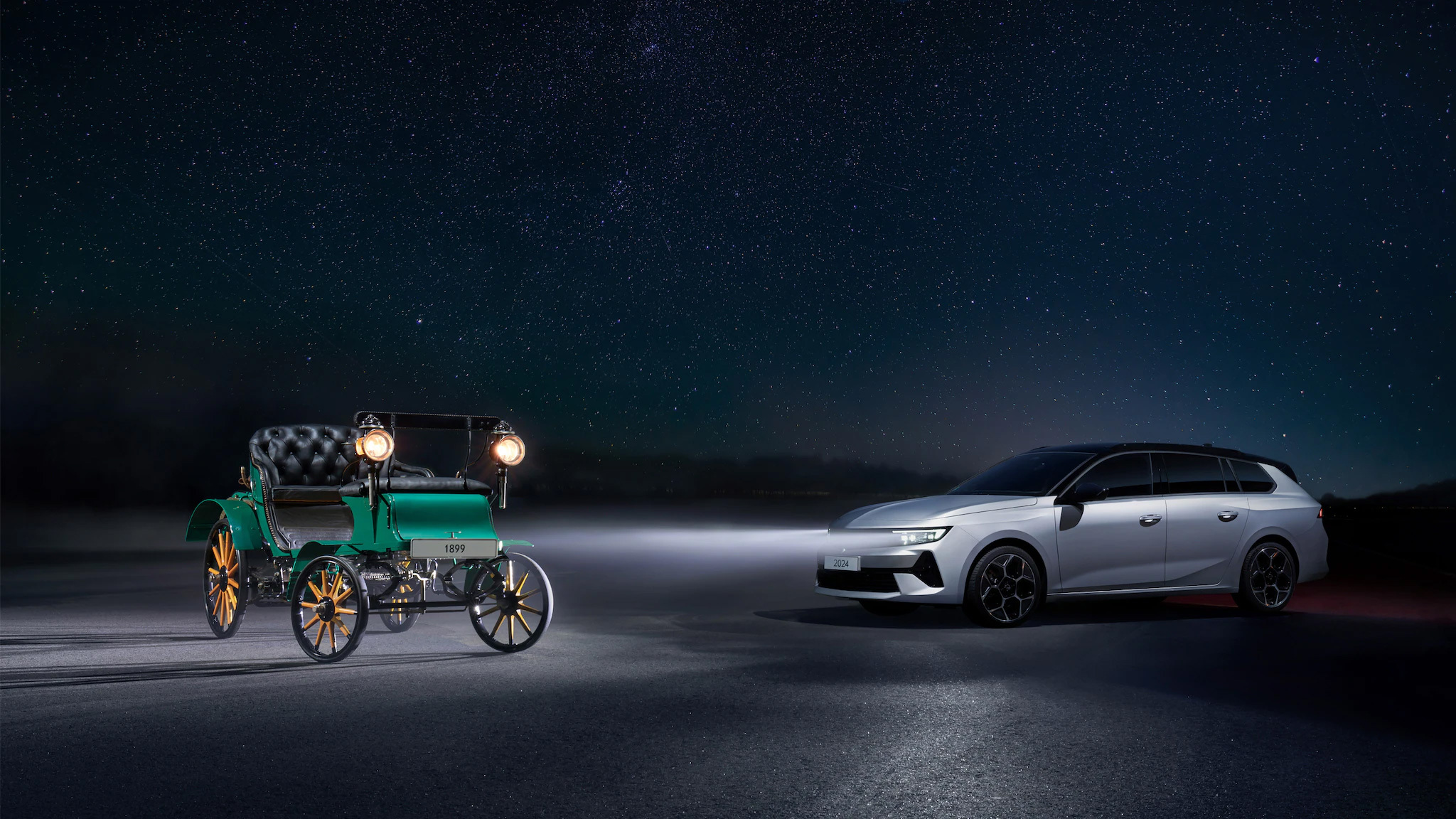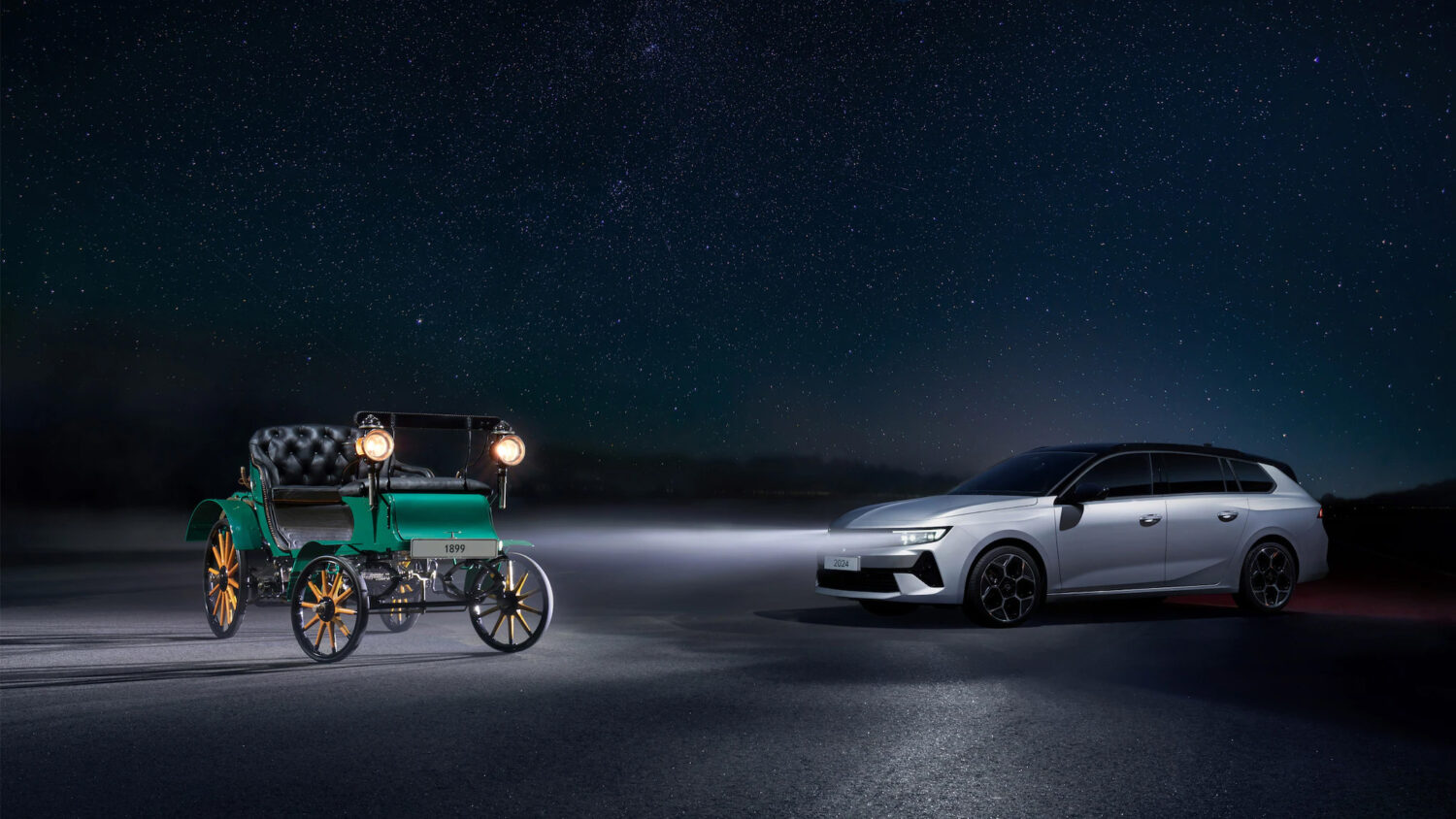
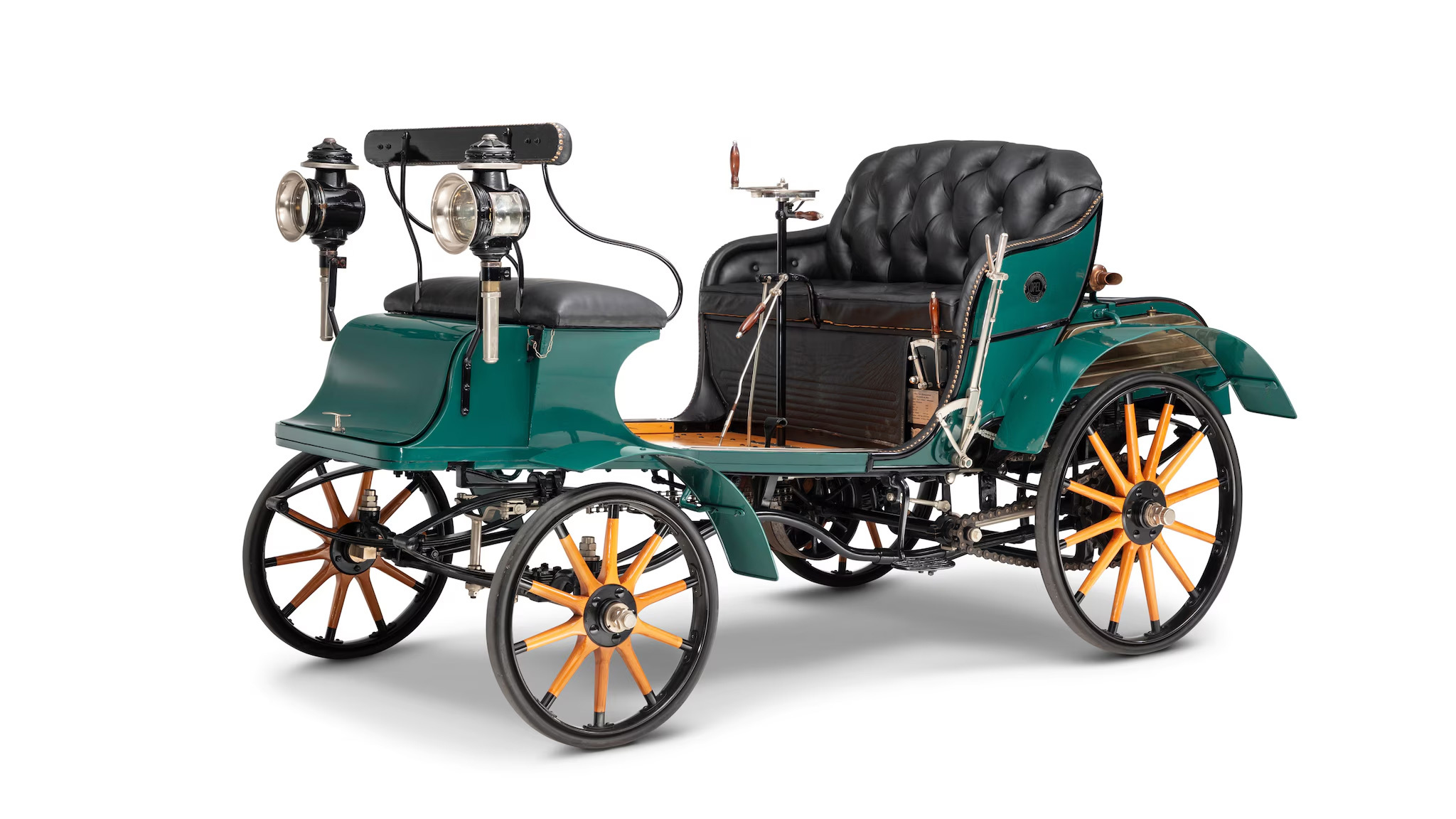
The first Opel in the spring of 1899 – Opel Patentwagen System Lutzmann
- Spring 1899: the first Opel motor vehicle was produced
- Individual mobility for all: 125 years of automotive innovations for millions of customers
- Current bestsellers from Rüsselsheim: Opel Astra and Astra Sports Tourer1
Wilhelm Opel, the second oldest son of the company founder Adam Opel, signed a contract with locksmith master Friedrich Lutzmann from Dessau on January 21, 1899, for the purchase of his motor vehicle factory. This date marks nothing less than the official start of automobile production at Opel – and thus the beginning of an era. Opel, which had previously been a successful manufacturer of sewing machines and bicycles, ventured into the then-unknown field of the automotive industry 125 years ago.
Since then, things have progressed very quickly: the first examples of the new Opel Patentmotorwagen left the factory in the spring of 1899 as the first cars produced in Rüsselsheim – to date, more than 75 million Opel vehicles have followed. Opel's goal has always been and remains to enable individual mobility and to provide accessible and, above all, affordable innovations across all segments of the Opel model range for a wide circle of customers.
One of the best – and current – examples is the latest generation of the compact class bestseller: Opel Astra, which is coming off the production line in Rüsselsheim. As a central part of Opel's electric offensive, it enables everyday individual mobility for many who want to be prepared for the future. The foundations for the continued successful production of cars in Rüsselsheim were laid exactly 125 years ago by the Opel Patentwagen System Lutzmann.
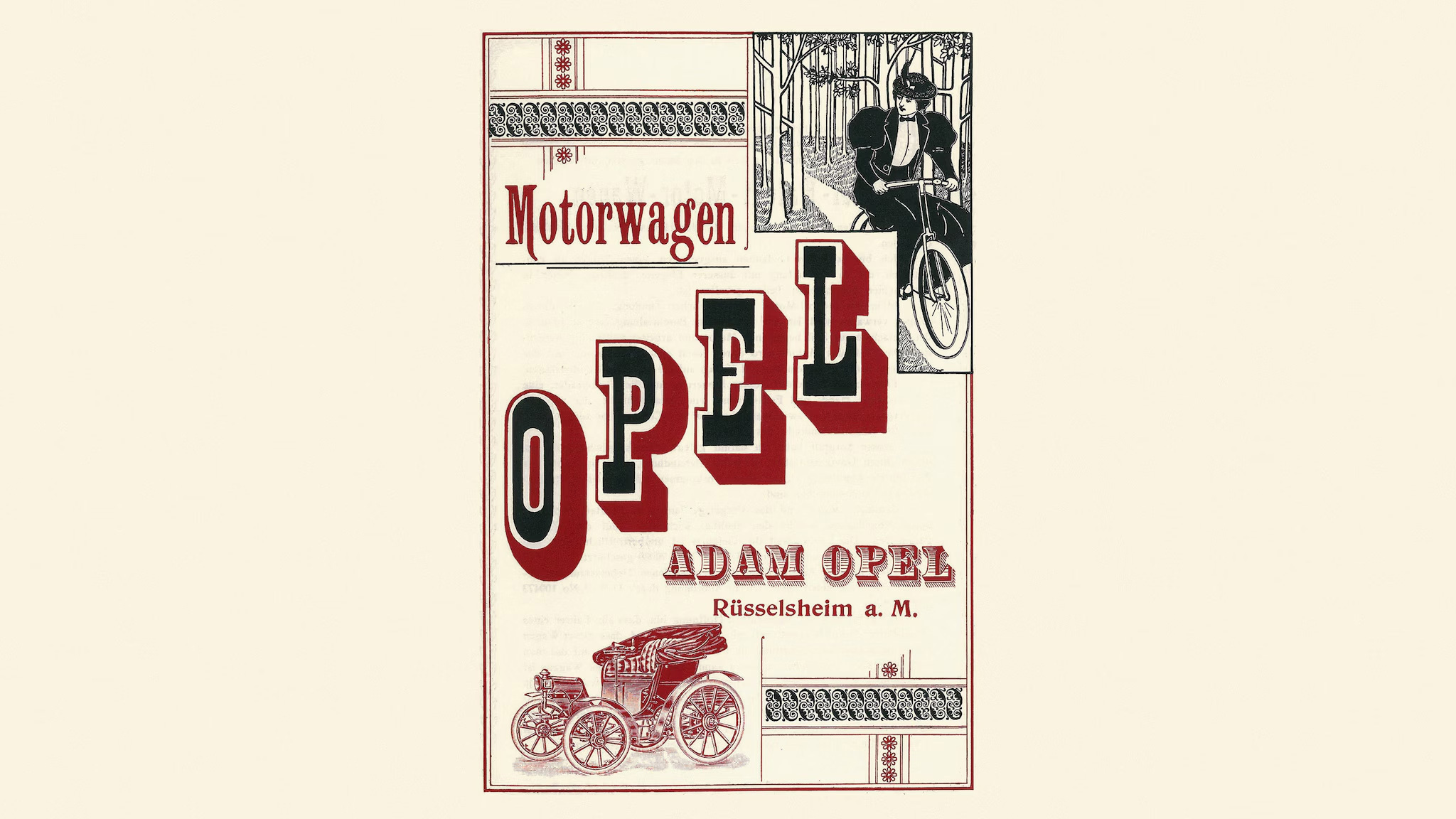
The first Opel in the spring of 1899 – Opel Patentwagen System Lutzmann
The first Opel car ‘made in Rüsselsheim’ was the Opel Patentwagen System Lutzmann, which rolled out of the factory in the spring of 1899. The horizontally mounted single-cylinder engine with a displacement of 1545 cm3, a bore of 122, and a stroke of 132 millimeters developed a maximum power of 2.6 kW (3.5 HP) at 650 revolutions per minute. The drive belt transmitted it through a two-speed gearbox to the rear axle. The motor carriage reached a maximum speed of about 20 km/h. After a few months, more powerful and faster versions were added. A delivery vehicle was even available.
Despite the euphoria of the automotive pioneers from Rüsselsheim, the Opel designed by Friedrich Lutzmann was no longer technically ‘up to par’ after the turn of the century. They were unable to achieve the desired production numbers even with improvements in cooling and power transmission and with new body variants designed by Lutzmann. The era of designs based on carriages with large wheels and engines under the seat came to an end. Friedrich Lutzmann no longer had ideas to design a modern car based on the latest technical knowledge and changing customer tastes. Therefore, in the summer of 1901, after just two and a half years, his employment at Opel ended.
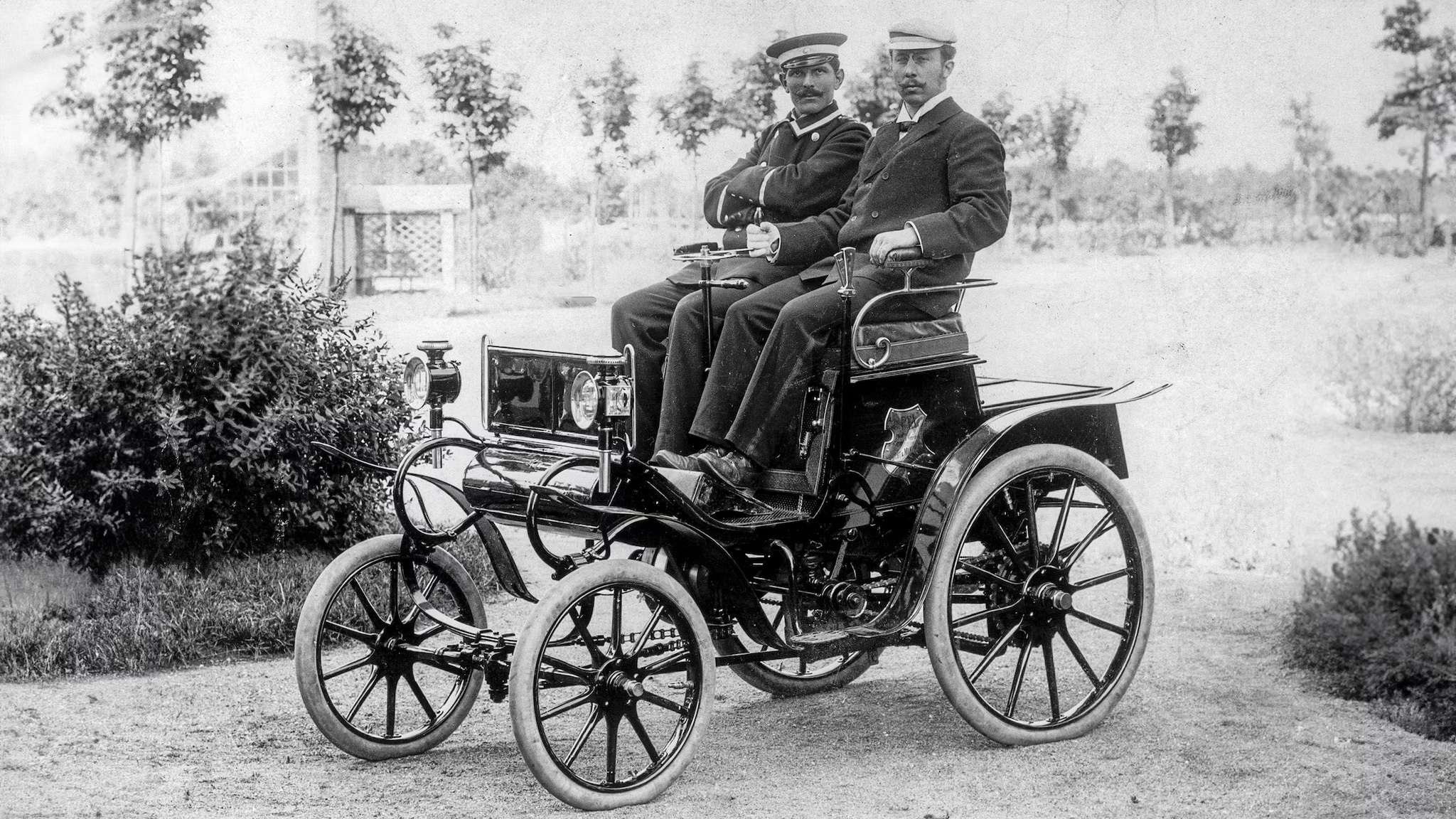
The Opel brothers thus increasingly turned their attention to France, which at that time was the center of technical progress. There, they were welcomed by Alexandre Darracq, an entrepreneurial French automotive pioneer who had already achieved initial success with the idea of light and relatively affordable cars. Darracq was immediately ready to collaborate. With the arrival of the first Darracq chassis and vehicles in the winter of 1901/1902, the masters from Rüsselsheim finally gained access to advanced materials that allowed them to establish themselves permanently in automobile production. At the same time, Opel's engineers began to master the art of making engines and cars themselves. Dependence on a single person could no longer be repeated in the future. By autumn 1902, Opel showcased the 10/12 PS model, its first in-house design, at the Hamburg Motor Show.
From ‘construction kit’ to ‘marriage’: innovations ‘on the assembly line’
By 1906, thousands of vehicles had already been produced. The breakthrough for the automobile manufacturer from Rüsselsheim came in 1909 with the legendary 4/8 PS ‘Doktorwagen’. Priced at 3950 marks, it was half the price of luxury competing models and paved the way for a wider population to own a car. The introduction of a modular system in 1910 also significantly contributed to this.
Opel was the first German manufacturer to introduce large-scale production using assembly line technology. The first car to roll off the assembly line in Germany in 1924 was the 4/12 PS ‘Laubfrosch’ – the green frog, as it was only available in green. Just three years later, the Opel 4 PS, with a base price of only 2980 marks, was no longer an expensive luxury item for the wealthy but had become a reliable means of transportation for many. At the same time, due to rational automobile production, it became more affordable year by year, while its performance continuously increased. Demand for Opels also grew, and in 1931, the 1.2-liter model became the first true ‘people's car’.
Shortly thereafter, the next revolution in production followed. In 1935, the new Olympia model became the first German series vehicle with a self-supporting steel body, which provided better driving characteristics and lower fuel consumption due to its light weight. The new design first allowed for the so-called ‘marriage’ between the body and the drive units. The entire production process became faster and more efficient, paving the way for this construction method into mass production.
Innovations today: Astra Sports Tourer Electric with Intelli-Lux Pixel LED® headlights
Just a year later, Opel established a tradition of nearly ninety years of successful compact class models: with the Kadett, Opel was the first manufacturer to bring a family-friendly and, above all, affordable compact car to market. Thus, the bestsellers ‘Kadett’ and ‘Astra’ are still synonymous with affordable innovations in the compact class today.
This is also demonstrated by the latest generation of the Astra, which was designed, constructed, and manufactured in Rüsselsheim and is also electrified, full of technological features, and at the same time perfectly suitable for everyday use. Systems such as the class-leading glare-free Intelli-Lux Pixel LED® headlights with a total of 168 adaptive LED elements and the Intelli-Drive 2.0 system with assistance for semi-automatic lane changes and intelligent speed adjustment ensure the highest possible safety. Enjoying responsible driving also means being on the road with as few emissions as possible, and this is precisely what the advanced engines in the new Opel Astra enable.